
Table of Contents
- Step 1: Build a Targeted List of the Right Retail Buyers
- Step 2: Craft Outreach Messaging That Retail Buyers Actually Read
- Step 3: Choose the Right Outreach Channels for Retail Conversations
- Step 4: Set Up Outbound Infrastructure for Consistent Results
- Step 5: Create a Follow-Up System That Converts Interest into Meetings
- Step 6: Optimize and Scale Your Retail Outreach Over Time
- Key Takeaways
- Conclusion: Building a Predictable System for Retail Meetings
- FAQs
Manufacturers seeking to expand their market reach often face a significant hurdle: securing meetings with busy retail buyers. These buyers are inundated with pitches, making traditional outreach methods increasingly ineffective. This guide outlines proven outbound strategies to generate consistent conversations with retail decision-makers, transforming sporadic efforts into a predictable pipeline for manufacturing growth.
The core challenge for manufacturers is overcoming the noise in a crowded market. Retail buyers are focused on specific metrics, and a generic approach will not yield results. This article details a systematic, six-step framework designed to cut through the clutter and position your manufacturing business as a valuable partner.
Step 1: Build a Targeted List of the Right Retail Buyers
Identifying and connecting with the correct retail buyers is the foundational step for successful outreach. This involves a precise approach to list building, prioritizing quality over sheer volume.
- Identify retailers that align with your product category, price point, and distribution capabilities.
- Focus on key decision-makers: procurement managers, category buyers, and merchandising directors.
- Utilize tools like LinkedIn Sales Navigator and industry databases to build accurate prospect lists.
- Segment your list by retailer size, distinguishing between big-box stores, regional chains, and independent retailers.
Quality of your prospect list is paramount when targeting retail. Retail buyers receive approximately 15 cold emails per week, with many deeming them irrelevant. A well-researched, targeted list ensures your message reaches someone who genuinely stands to benefit from your offer, increasing the likelihood of engagement.
Step 2: Craft Outreach Messaging That Retail Buyers Actually Read
Effective outreach messaging speaks directly to a retail buyer's core concerns. It avoids generic pitches and instead focuses on tangible value.
Retail buyers primarily care about margin, sell-through rates, product differentiation, and efficient logistics. Your messaging must position your manufacturing business as a strategic partner that can enhance these areas, not just another vendor.
- Address how your product increases their margin potential or improves sell-through rates.
- Highlight unique selling propositions that differentiate your offering from competitors.
- Clearly articulate logistical advantages or support, such as reliable supply chains.
- Include a clear Call-to-Action (CTA) for a brief, exploratory conversation.
Avoid common mistakes such as feature dumps or unclear asks. Instead, present your solution as a means to solve a problem or capitalize on an opportunity for the retailer. Advanced personalization can boost response rates to 18% compared to 9% for generic emails. Visuals like product sell sheets can be used strategically after initial interest is established.
Step 3: Choose the Right Outreach Channels for Retail Conversations
A multi-channel approach is often the most effective for reaching busy retail buyers. This involves coordinating various communication methods to increase touchpoints and response rates.
Cold email remains a primary channel for retail buyer outreach in 2026. B2B decision-makers prefer email for cold outreach, with 68% favoring it.
LinkedIn outreach serves as a valuable supporting channel. It allows for personalized connections and leveraging professional networks. Phone follow-up, timed appropriately after initial digital contact, can also be effective. Trade show follow-up sequences are crucial for converting initial interest into concrete meetings. Coordinating these channels through multi-channel cadences maximizes response rates.
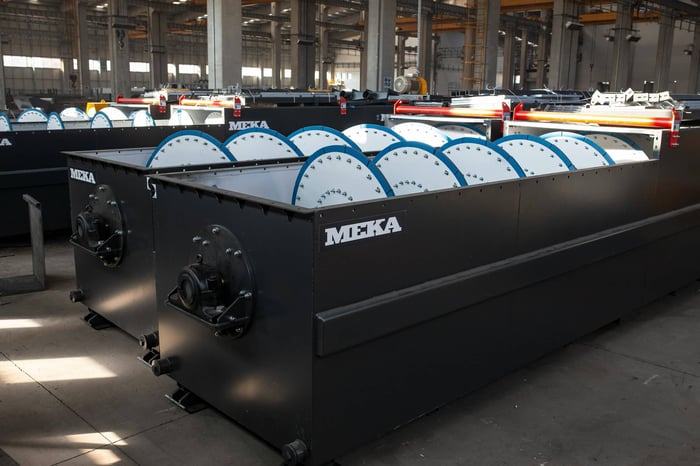
Outreach Channels for Retail Buyer Meetings: Effectiveness Comparison
| Channel | Effectiveness for Retail Buyers | Cost | Scalability | Best Use Case |
|---|---|---|---|---|
| Cold Email (Multi-Domain Setup) | High, especially with personalization and clear value proposition. B2B open rates average 20-35%, delivery rates at 98.16% with proper targeting. | Low-Moderate (software, list building) | High (can reach thousands of prospects) | Initial contact, broad reach, A/B testing messaging. |
| LinkedIn Outreach | Moderate-High, excellent for personalization and relationship building. Social media outreach results in a 42% response rate. | Moderate (Sales Navigator subscription) | Moderate (manual personalization limits volume) | Targeted outreach to specific roles, relationship nurturing. |
| Cold Calling | Low-Moderate (often seen as intrusive). 23% response rate. | Moderate (SDR time, phone tools) | Moderate (time-intensive per prospect) | Follow-up to warm leads or after email engagement. |
| Trade Show Follow-Up | High (pre-established context). | Varies (trade show attendance cost) | Low-Moderate (limited by event attendance) | Converting event connections into concrete meetings. |
| Referrals/Warm Introductions | Very High (built-in trust). | Low (network-dependent) | Low (limited by network size) | High-value targets, strategic accounts. |
| Done-For-You Outbound System | Very High (optimized for consistency and results). Outsourced SDRs deliver 5:1 ROI in 90 days and reduce costs by 30-50%. | Moderate-High (agency fees) | Very High (managed by experts) | Manufacturers seeking predictable, scalable meeting generation without internal overhead. |
Step 4: Set Up Outbound Infrastructure for Consistent Results
A robust outbound infrastructure is essential for scalable and predictable meeting generation. This involves technical setup and efficient management systems.
Deliverability is critical to ensure your emails reach retail buyers' inboxes. Implementing proper email authentication protocols (SPF, DKIM, DMARC) is mandatory, especially with stricter bulk sender rules from major providers like Gmail and Outlook.
- Warm up new email domains to establish sender reputation.
- Implement a CRM to manage retail prospect pipelines effectively.
- Balance automation with personalization to maintain relevance.
- Consider done-for-you outbound systems to eliminate technical complexity and manage deliverability.
Email deliverability averages around 83.1% across industries, but top performers achieve 95%+. B2B campaigns can reach 98.16% delivery rates with proper targeting and infrastructure. Danish Lead Co. specializes in building these AI outbound systems for lead generation, ensuring high deliverability and consistent pipeline.
Step 5: Create a Follow-Up System That Converts Interest into Meetings
Retail buyers are exceptionally busy, making persistence a virtue, provided it's strategic and not pushy. An effective follow-up system is non-negotiable for converting initial interest into confirmed meetings.
Designing a 6-8 touch follow-up sequence for non-responders is often necessary. This sequence should be spread over several weeks to avoid overwhelming the recipient.
- Vary the content of your follow-ups: share case studies, product updates, or retailer success stories.
- Time your follow-ups strategically; optimal cadence can significantly improve engagement.
- Move from soft interest (e.g., "send me info") to securing a confirmed calendar slot.
- Remember that consistent follow-ups can double conversions.
The average B2B lead response time is 42 hours, but companies that respond within one hour are 7x more likely to qualify leads. This highlights the importance of timely and relevant follow-up.

Step 6: Optimize and Scale Your Retail Outreach Over Time
Outbound is not a one-time campaign; it's a continuous process of optimization and scaling. This iterative approach ensures long-term success and predictable growth.
Tracking key metrics is vital for understanding performance. This includes response rates, meeting conversion rates, and the value of your pipeline.
- A/B test different messaging, subject lines, and value propositions to identify what resonates best.
- Expand your target list as you find high-performing segments.
- Leverage AI and automation to scale outreach without sacrificing personalization.
- Continuously refine your approach based on data-driven insights.
Danish Lead Co. helps manufacturing clients build and optimize these retail outreach systems, turning them into predictable growth channels. Our AI-powered cold emailing tactics to boost your sales pipeline are designed to adapt and improve over time, providing a sustained competitive advantage. For insights into real-world applications, explore our manufacturing case studies and retail industry case studies.
Key Takeaways
- Targeted list building is the foundation for effective retail outreach, prioritizing quality over quantity.
- Craft personalized outreach messages that clearly articulate value, focusing on retailer-specific concerns like margin and logistics.
- Utilize a multi-channel approach, primarily cold email with strong deliverability, supported by LinkedIn and strategic follow-ups.
- Build a robust outbound infrastructure, including proper email authentication and CRM, to ensure consistent results.
- Implement a persistent, multi-touch follow-up sequence to convert interest into confirmed meetings.
- Continuously optimize and scale your outreach through A/B testing and data analysis to achieve predictable growth.
Conclusion: Building a Predictable System for Retail Meetings
Generating more meetings with retail buyers for manufacturing businesses requires a strategic, systematic approach. By moving beyond traditional, often ineffective methods, manufacturers can build a predictable pipeline of retail conversations. The six-step framework outlined—from precise list building and personalized messaging to robust infrastructure and continuous optimization—provides a clear roadmap. This approach transforms sporadic outreach into a reliable engine for growth, allowing manufacturers to secure valuable retail distribution partnerships. Whether implemented internally or through a specialized outbound agency like Danish Lead Co., establishing this system ensures that retail distribution becomes a consistent and predictable channel for sustained business expansion.