Table of Contents
- 1. How can multi-domain cold email systems effectively reach procurement teams?
- 2. How can manufacturers use targeted LinkedIn outreach to connect with procurement managers?
- 3. What role do industry-specific trade shows and procurement events play in reaching buyers?
- 4. How can SEO-optimized content attract procurement teams researching suppliers?
- 5. How can referral programs and existing customer advocacy generate new procurement opportunities?
- Comparison: Which Channel Works Best for Your Manufacturing Business?
- Key Takeaways
- Conclusion: Building a Systematic Approach to Procurement Outreach
- FAQs
Manufacturers aiming to secure new contracts understand that reaching procurement teams requires a tailored approach. Unlike traditional sales contacts, procurement professionals prioritize value, efficiency, and clear ROI. Most manufacturers struggle because they use generic outreach that fails to address procurement's specific pain points and evaluation criteria. This article outlines proven channels and strategies that effectively generate RFQs and procurement conversations with enterprise buyers in today's B2B landscape.
Procurement teams are increasingly data-driven, evaluating new suppliers across operational performance, quality, compliance, and strategic capability rather than just cost-per-unit according to Wolverine LLC. They are moving from reactive problem-solving to proactive, data-driven evaluation, often leveraging centralized supplier management platforms as highlighted by Yodiwo. Success in this environment means aligning your outreach with their priorities for cost savings, efficiency gains, and supply chain improvements.
1. How can multi-domain cold email systems effectively reach procurement teams?
Cold email remains the most scalable channel for reaching procurement at scale, particularly when built with robust deliverability infrastructure. The critical importance of multi-domain infrastructure lies in its ability to avoid spam filters and maintain sender reputation, ensuring your messages land in the inbox. B2B emails achieve a 98.16% delivery rate, though only 84.3% reach the primary inbox as noted by TrulyInbox.
To leverage cold email effectively:
- Multi-domain Warmup: Use several warmed domains and at least three mailboxes to distribute sending volume and protect your primary domain according to Abstrakt Marketing Group.
- Targeted Messaging: Craft procurement-focused emails that lead with quantifiable benefits like cost savings, efficiency gains, or supply chain resilience.
- Authentication: Implement sender authentication (SPF, DKIM, DMARC) to meet new Google and Microsoft sender rules as detailed by Verified.Email.
- Gradual Scaling: Start new domains at 20-30 cold emails per day and gradually increase, monitoring inbox placement and reply rates per Mailreach.
Danish Lead Co. specializes in building these multi-domain, high-deliverability cold email systems, enabling manufacturers to generate consistent RFQ conversations through systematic email outreach. We've seen how a well-engineered cold email system can consistently deliver qualified leads, demonstrating the power of AI outbound systems for lead generation.
2. How can manufacturers use targeted LinkedIn outreach to connect with procurement managers?
Targeted LinkedIn outreach serves as a valuable supporting channel, enhancing multi-touch engagement when layered with email campaigns. Identifying and connecting with procurement titles such as Procurement Manager, Director of Purchasing, or Supply Chain Director on LinkedIn is a crucial first step. Connection request acceptance rates range from 30-45% according to Salesbread, emphasizing the need for a strategic approach.
Effective LinkedIn outreach involves:
- Value-Driven Connections: Send connection requests that reference specific pain points or offer tangible value, rather than generic pitches.
- Short, Relevant Messages: Keep messages concise and personalized. Tailored outreach achieves 15-25% reply rates per Martal Group, compared to generic messages.
- Multi-Channel Integration: Use LinkedIn as part of a broader multi-channel strategy, where combining email, LinkedIn, and phone can increase results by 287% as reported by OutboundSystem.
This approach is particularly effective for reaching R&D managers and procurement teams, creating opportunities for deeper engagement.
3. What role do industry-specific trade shows and procurement events play in reaching buyers?
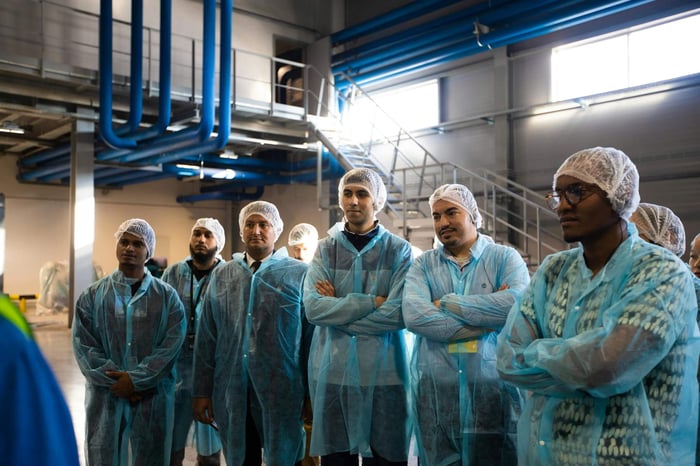
Face-to-face interaction at industry-specific trade shows and procurement events remains valuable for high-ticket manufacturing relationships. These events offer a direct path to decision-makers, with 81% of attendees having buying authority according to Vfairs. The cost per lead at trade shows is $112, significantly lower than the $259 for traditional field sales calls as reported by K&E Photobooths.
To maximize ROI from trade shows:
- Strategic Selection: Identify procurement-focused trade shows relevant to your niche.
- Pre-event Outreach: Actively schedule meetings before the show floor opens to secure dedicated time with key contacts suggests Exhibit Craft.
- Post-event Follow-up: Implement a rapid, personalized follow-up strategy within 48 hours to convert conversations into RFQs.
While digital outreach offers scalability, trade shows provide a unique environment for building trust and rapport, especially for complex manufacturing solutions.

4. How can SEO-optimized content attract procurement teams researching suppliers?
Procurement teams extensively research suppliers online before initiating contact, making SEO-optimized content a critical inbound channel. Nearly 70% of B2B buyers complete their purchasing process before even talking with a salesperson per DW Media. Creating content that ranks for procurement search queries, such as "best [product type] suppliers" or "[industry] procurement solutions," ensures your business is visible during this crucial research phase.
Key strategies for SEO-optimized content:
- Answer Procurement Questions: Develop content that directly addresses common questions and pain points of procurement professionals.
- Case Studies and Comparisons: Publish detailed case studies and comparison content to build credibility and demonstrate expertise with procurement buyers.
- AI SEO: Leverage AI-optimized blog content to increase inbound visibility among procurement researchers, who increasingly use AI tools like ChatGPT during their purchasing journey as noted by Corporate Visions.
This strategy aligns with the digital-first engagement that now dominates B2B buying, with 80% of buyer interactions occurring through digital channels according to Thunderbit.
5. How can referral programs and existing customer advocacy generate new procurement opportunities?
Procurement teams place high trust in peer recommendations, making referral programs one of the most powerful channels for new business. Referred prospects convert 20-30% higher than cold traffic due to pre-established trust states Martal Group. Systematically asking existing customers for introductions to their network is crucial.
To build an effective referral program:
- Identify Advocates: Focus on loyal customers with proven success and public praise.
- Incentivize Referrals: Create a clear incentive structure that motivates customers to advocate on your behalf. Examples include gift cards or discounts.
- Streamlined Process: Make it easy for customers to refer, with clear instructions and minimal effort required.
Existing relationships are often the fastest path to new procurement conversations, leveraging the trust deficit many buyers have with vendor claims as highlighted by Search Engine Journal. For B2B suppliers and manufacturers, this channel can significantly reduce sales cycles.
Comparison: Which Channel Works Best for Your Manufacturing Business?
Not all channels work equally well for every manufacturer; the optimal mix depends on deal size, sales cycle, and target market. High-volume, transactional procurement benefits most from scalable digital channels like cold email and SEO. For high-ticket, relationship-driven deals, layering in LinkedIn, trade shows, and referrals is essential. Danish Lead Co. helps manufacturers build multi-channel outbound systems tailored to their Ideal Customer Profile (ICP), ensuring a strategic and effective approach.
This table compares the most common outbound channels manufacturers use to reach procurement teams, evaluating them across scalability, cost-efficiency, relationship depth, and speed to results. Use this to determine which channel mix fits your business model and procurement target profile.
| Channel | Scalability | Cost-Efficiency | Relationship Depth | Speed to First Conversation | Best For |
|---|---|---|---|---|---|
| Multi-Domain Cold Email (Danish Lead Co. Approach) | Very High | High (low cost per lead) | Moderate (personalized at scale) | Fast (days to weeks) | High-volume outreach, initial contact, RFQs |
| LinkedIn Outreach | Moderate | Moderate | Moderate to High (professional context) | Moderate (weeks) | Supporting email, relationship building, specific titles |
| Trade Shows & Events | Low (physical limits) | Moderate to Low (high upfront cost) | High (face-to-face interaction) | Moderate (event schedule) | High-ticket deals, brand building, direct engagement |
| SEO-Optimized Content | High (always-on visibility) | High (long-term ROI) | Low (indirect, self-service) | Slow (months for ranking) | Inbound leads, thought leadership, early research phase |
| Referral Programs | Moderate (depends on network) | Very High (lowest cost per acquisition) | Very High (pre-built trust) | Variable (opportunity-driven) | High-trust deals, warm introductions, reduced sales cycle |
Key Takeaways
- Procurement teams prioritize value, efficiency, and clear ROI, requiring tailored outreach.
- Multi-domain cold email offers scalable, cost-effective outreach for generating RFQs.
- LinkedIn outreach is effective as a supporting channel for building professional relationships.
- Trade shows are valuable for high-ticket manufacturing deals, especially with pre- and post-event strategies.
- SEO-optimized content captures inbound interest from procurement teams during their research phase.
- Referral programs leverage existing trust for the highest conversion rates from new leads.
- An integrated, multi-channel approach is essential, customized to deal size and sales cycle.
Conclusion: Building a Systematic Approach to Procurement Outreach
The most successful manufacturers no longer rely on a single channel; they build integrated, systematic outbound engines designed to reach procurement teams effectively. By combining scalable channels like multi-domain cold email with targeted LinkedIn outreach, strategic trade show participation, robust SEO-optimized content, and powerful referral programs, manufacturers can create a predictable pipeline of RFQs and qualified conversations. Danish Lead Co. specializes in designing these comprehensive case studies in the manufacturing sector, removing the guesswork and accelerating results. Our approach, rooted in long-term thinking and operational excellence, ensures you have a system that consistently works, delivering the right message to the right procurement decision-makers. Explore more strategies from our cold email blog to refine your outreach.