

Table of Contents
- Introduction to Cold Email Optimization
- Understanding the Cold Email Market Dynamics
- Building a Solid Technical Foundation for Deliverability
- Advanced Personalization Strategies for Engagement
- Crafting Effective Messages and Subject Lines
- Optimizing Follow-Up Sequences and Timing
- Leveraging AI Technology for Enhanced Outreach
- Adopting an Omnichannel Approach for Higher Conversions
- Continuous Monitoring and Optimization
- Frequently Asked Questions (FAQ)
- Conclusion
Introduction to Cold Email Optimization
In the competitive landscape of tech startups, cold email remains a vital tool for lead generation and business development. However, declining open and reply rates, coupled with increasingly stringent spam filters, present significant challenges. This comprehensive guide delves into the strategies and AI technology solutions necessary to dramatically improve cold email deliverability and booking rates for tech startups. We will explore everything from technical setup and advanced personalization to strategic follow-ups and the transformative power of AI technology trends in outreach.
The goal is not just to send emails, but to ensure they land in the inbox, resonate with the recipient, and ultimately drive conversions. By implementing the best practices outlined here, tech startups can overcome common hurdles, stand out from the noise, and achieve predictable growth. This involves a multi-faceted approach that combines meticulous technical configuration with highly personalized, value-driven messaging, all supported by intelligent automation and continuous optimization.
Understanding the nuances of sender reputation, email authentication, and content relevance is paramount. We will provide actionable insights, supported by the latest industry statistics and expert advice, to help you navigate the complexities of modern cold email outreach. From initial domain warm-up to sophisticated AI technology strategies for content generation, every element plays a crucial role in your campaign's success.
Understanding the Cold Email Market Dynamics
The cold email landscape is constantly evolving, presenting both challenges and opportunities for tech startups. Recent data indicates a significant shift in performance metrics, highlighting the need for more sophisticated approaches. According to Martal, the average B2B cold email open rate in 2025 has declined to 27.7%, down from approximately 36% in 2024. Similarly, average reply rates have dropped to 5.1% in 2025, with a staggering 95% of cold emails failing to generate replies. These statistics underscore the fierce competition in the inbox and the heightened expectations of recipients.
Despite these challenges, the potential for high-performing campaigns remains. Platforms like beehiiv report higher average open rates for tech-specific campaigns, reaching up to 42.25%, suggesting that niche targeting and quality content can still yield strong results. However, approximately 17% of cold emails never reach the inbox due to poor domain authentication, high bounce rates, or spam-triggering language, as highlighted by Martal's research. This emphasizes the critical importance of technical setup and sender reputation.
What are the key takeaways from current market trends?
- Declining Engagement: Both open and reply rates are on a downward trend, making it harder for generic campaigns to succeed.
- Increased Competition: Inboxes are more crowded than ever, requiring messages to be highly relevant and stand out.
- Stricter Filters: Email service providers (ESPs) are employing advanced AI technology to detect and filter out spam, making deliverability a top priority.
- Opportunity for Excellence: While averages are low, campaigns that master personalization, technical setup, and strategic follow-ups can achieve significantly higher engagement, sometimes 2-3X the average reply rates, as noted by Martal.
The cost implications of poor performance are substantial. The high failure rate (95%) implies significant wasted effort and potential ad spend if cold email strategies are not optimized. Therefore, investing in best practices and leveraging AI technology solutions is not just about improving metrics, but about maximizing ROI and ensuring sustainable growth for tech startups.
| Metric | B2B Average | Tech/High-Performing | Notes |
|---|---|---|---|
| Open Rate | 27.7% | Up to 42.25% | Shorter, personalized subject lines help Martal, beehiiv |
| Reply Rate | 5.1% | Up to 18% (personalized) | Advanced personalization key Martal |
| Conversion Rate | <1% | N/A | B2B focus Campaign Refinery |
| Failure Rate | 95% | N/A | Most emails get no reply Martal |
| Deliverability Issue | 17% | N/A | Technical setup critical Martal |
Building a Solid Technical Foundation for Deliverability
Before focusing on message content, tech startups must establish a robust technical foundation to ensure their cold emails actually reach the inbox. Poor deliverability renders even the best-crafted messages useless. A staggering 17% of cold emails never reach the inbox due to technical issues, as reported by Martal. This highlights the critical role of proper setup.
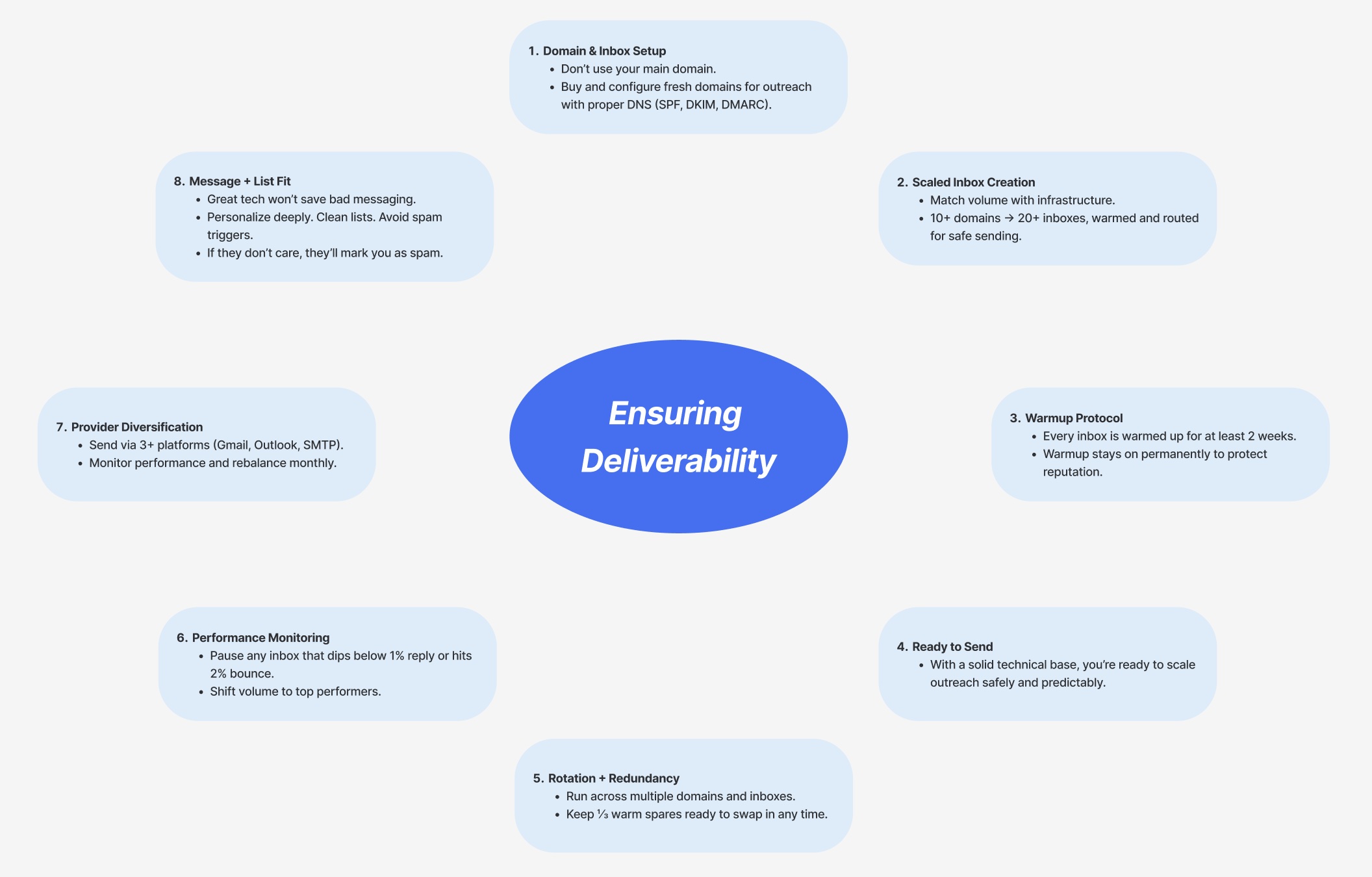
Essential Steps for Technical Deliverability:
- Domain & Inbox Setup: It's crucial to avoid using your main domain for cold outreach to protect its reputation. Instead, acquire and configure fresh domains specifically for sending. This practice minimizes risk to your primary business operations if an outreach domain gets flagged.
- DNS Records (SPF, DKIM, DMARC):These email authentication protocols are non-negotiable.
- SPF (Sender Policy Framework): Specifies which mail servers are authorized to send email on behalf of your domain.
- DKIM (DomainKeys Identified Mail): Adds a digital signature to your emails, verifying that the email hasn't been tampered with in transit.
- DMARC (Domain-based Message Authentication, Reporting & Conformance): Builds on SPF and DKIM, telling receiving servers how to handle emails that fail authentication (e.g., quarantine, reject). Proper configuration of these records is a primary factor in preventing emails from being marked as spam, as emphasized by Salesforge.
- Scaled Inbox Creation: Match your sending volume with adequate infrastructure. For safe scaling, consider using 10+ domains and 20+ warmed inboxes. This distributes your sending volume, preventing any single domain or inbox from being overwhelmed and flagged.
- Warmup Protocol: Every new inbox must be warmed up for at least two weeks before active use. This involves sending a low volume of emails that gradually increases, simulating natural email activity. Continuous warmup is essential to maintain sender reputation. Tools like Smartlead.ai offer AI-powered email warmups to automate this process.
- Rotation + Redundancy: Run outreach across multiple domains and inboxes. Maintain a buffer of "warm spares" (e.g., ⅓ of your total inboxes) ready to swap in if an active inbox experiences deliverability issues. This ensures continuous outreach without interruption.
- Performance Monitoring: Continuously monitor the performance of each inbox. Pause any inbox that drops below a 1% reply rate or hits a 2% bounce rate. Shift sending volume towards top-performing inboxes to optimize overall campaign effectiveness.
- Provider Diversification: Avoid relying on a single email service provider (ESP). Send via 3+ providers (e.g., Gmail, Outlook, SMTP) and monitor their performance. Rebalance your sending strategy monthly based on which providers offer the best deliverability.
- Email Validation: Use email validation tools to clean your lists before sending. This reduces bounce rates, which are a major red flag for ESPs and can severely damage your sender reputation.
By meticulously implementing these technical steps, tech startups can significantly improve their inbox placement rates, laying the groundwork for successful cold email campaigns. Without this foundation, even the most compelling offers will never be seen.
Advanced Personalization Strategies for Engagement
In an era of declining cold email engagement, advanced personalization is no longer a luxury but a necessity. Generic emails are quickly dismissed, contributing to the 95% failure rate of cold emails to generate replies, as reported by Martal. However, advanced personalization can double or triple response rates, with some campaigns achieving up to 18% reply rates—far above the 5% average. Yet, only 5% of senders personalize every message, indicating a significant missed opportunity.
What defines advanced personalization, and how can tech startups implement it effectively?
- Beyond First Name: While using a recipient's first name is basic, true personalization goes much deeper. It involves referencing specific work, interests, recent achievements, or publicly available information relevant to the recipient or their company.
- Segmented Messaging: As highlighted by Warmy.io, "Not every lead has the same pain point and creating an email for each segment of your target market will greatly increase your response rate. In fact, there were reports of marketers seeing a 760% increase in email revenue due to segmented campaigns." This means dividing your lead list by industry, company size, job title, and even specific pain points, then tailoring your message to each segment.
- Leveraging Data Enrichment: Tools like Clay can enrich lead data, providing insights into a prospect's tech stack, recent news, or even personal interests mentioned on LinkedIn. This data forms the basis for hyper-personalized emails.
- Use-Case Specific Campaigns: A Bravado community member emphasized running "use-case specific campaigns." This involves identifying a specific problem your product solves for a particular industry or role and crafting your entire message around that single, relevant use case.
Case Study in Action: While specific company names are often confidential, the principle of deep segmentation and personalization is consistently praised. Imagine a tech startup selling an AI-powered analytics tool. Instead of a generic email, they could:
- Segment by Industry: Target SaaS companies specifically.
- Segment by Role: Focus on Head of Product or VP of Engineering.
- Personalize Content: Reference a recent article the prospect's company published about their data challenges, or mention a specific competitor they are facing.
- Tailor Solution: Explain how their AI analytics tool specifically addresses the data challenges mentioned in the article or helps them gain an edge over that competitor.
This level of detail demonstrates genuine research and understanding, making the recipient feel seen and valued, rather than just another name on a list. The relevance to the recipient (e.g., mentioning a recent podcast or book) increases response rates by over 30%, according to beehiiv. Integrating AI technology can help automate the data gathering and initial draft creation for such personalized messages, scaling this effort without sacrificing quality.
Crafting Effective Messages and Subject Lines
Once deliverability is secured and personalization data is gathered, the next crucial step is crafting compelling messages and subject lines that capture attention and drive action. The subject line is the gatekeeper to your email, and its effectiveness directly impacts open rates. According to beehiiv, keeping subject lines short (0–20 characters) can boost open rates to over 40%. Personalized subject lines generate 32.7% more replies, further emphasizing the need for relevance.

Key Elements of Effective Cold Email Content:
- Concise Subject Lines:Aim for brevity and clarity. Examples:
- "Quick question, [Recipient Name]"
- "Idea for [Company Name] growth"
- "Solving [Pain Point] at [Company Name]"
- Clear Value Proposition: Immediately articulate the benefit to the recipient. What problem do you solve, and how does your tech solution specifically help them? Focus on their needs, not just your product's features.
- Personalized Opening: Start with a personalized hook that references something specific about the recipient or their company. This demonstrates you've done your homework and aren't sending a mass email. For instance, "Saw your recent post on LinkedIn about X, and it resonated with our work at Y."
- Brevity and Scannability: Keep your email short and to the point. Most recipients scan emails quickly. Use short paragraphs, bullet points, and bold text to highlight key information. The goal is to convey your message efficiently.
- Single Call to Action (CTA):Every cold email should have one clear, easy-to-understand call to action. Examples:
- "Would you be open to a 15-minute chat next week?"
- "Interested in seeing a quick demo?"
- "Let me know if this is relevant, and I can share more."
- Avoid Spam Triggers: Steer clear of buzzwords, excessive exclamation points, all caps, and attachments. These can flag your email as spam, regardless of your technical setup.
What are some common mistakes to avoid?
- Overly Salesy Language: Focus on providing value and solving problems, not aggressively selling.
- Lack of Specificity: Generic claims like "we help companies grow" are ineffective. Be specific about the problem you solve and the results you deliver.
- Poor Grammar and Spelling: Proofread meticulously. Errors undermine credibility.
- Ignoring Mobile Readability: Many emails are read on mobile devices. Ensure your emails are formatted for easy reading on small screens.
By combining a strong technical foundation with meticulously crafted, personalized messages and compelling subject lines, tech startups can significantly improve their chances of getting their cold emails opened, read, and acted upon.
Optimizing Follow-Up Sequences and Timing
Sending a single cold email is rarely enough to secure a booking. Consistent and strategic follow-up sequences are crucial for increasing reply rates, with some studies showing they can boost responses by over 50%, according to Martal. However, nearly half of sales representatives never send a second email, missing out on significant opportunities. The key lies in thoughtful persistence, avoiding over-persistence that can lead to unsubscribes and spam complaints.
Best Practices for Follow-Up Sequences:
- Strategic Timing: Emails sent on Monday or Tuesday at 1 PM historically perform best, as noted by Martal. However, this can vary by industry and target audience. A/B test different send times to find what works best for your specific niche.
- Optimal Number of Follow-Ups: While more follow-ups can increase replies, there's a point of diminishing returns. The Belkins study found that the highest reply rate (8.4%) comes from just one email, but subsequent emails can still yield results if done correctly. Sending four or more emails in a sequence more than triples unsubscribe and spam complaint rates. A sequence of 3-5 emails, spread out over several days or weeks, is often effective.
- Varying Content and Value:Each follow-up should add new value or perspective, rather than simply repeating the initial message.
- Email 2 (2-3 days later): Reiterate your value proposition, perhaps with a different angle or a short case study.
- Email 3 (5-7 days later): Share a relevant resource (blog post, whitepaper, video) or a testimonial.
- Email 4 (10-14 days later): A "breakup email" that offers a final chance to connect, signaling that you'll stop reaching out after this.
- Multi-Tier Outreach: As suggested by a Bravado community member, contact several relevant stakeholders per company (e.g., 5–6), not just the CEO. Title ownership varies, and a multi-pronged approach increases your chances of connecting with the right decision-maker.
- Industry-Specific Tolerance: Be mindful of industry norms. Belkins' research indicates that manufacturing, solar, and logistics sectors tolerate more follow-ups, while crypto, cloud, and healthcare industries do not. Adjust your sequence length and frequency accordingly.
What are the benefits of a well-structured follow-up sequence?
- Increased Visibility: Your message might get lost in a busy inbox the first time. Follow-ups bring it back to the top.
- Building Trust: Thoughtful follow-ups demonstrate persistence and genuine interest in helping, rather than just making a quick sale.
- Opportunity for New Information: Each follow-up is a chance to provide new insights or address potential objections.
- Higher Conversion Rates: Ultimately, more touchpoints lead to more conversations and, consequently, more booked meetings.
Automating follow-up sequences with tools like Outreach.io or Mixmax can ensure consistency and efficiency, allowing sales teams to focus on engaging with interested prospects. However, always ensure that automation doesn't compromise personalization and relevance.
Leveraging AI Technology for Enhanced Outreach
The integration of AI technology is revolutionizing cold email outreach, offering unprecedented capabilities for personalization, deliverability, and efficiency. For tech startups, harnessing AI technology trends is no longer optional but a strategic imperative to stay competitive and improve booking rates. AI can automate tedious tasks, provide deeper insights, and enable hyper-personalization at scale.
How AI Technology Enhances Cold Email Campaigns:
- AI-Powered Personalization:
- Data Enrichment: AI tools can scrape public data (LinkedIn profiles, company websites, news articles) to gather deep insights about prospects, identifying their pain points, tech stack, and recent activities.
- Dynamic Content Generation: Based on enriched data, AI can assist in crafting highly personalized email intros and body paragraphs that reference specific details, making each email feel uniquely tailored. This goes beyond simple merge tags.
- Sentiment Analysis: Some AI tools can analyze the sentiment of a prospect's online presence to help tailor the tone and approach of your outreach.
- Optimized Deliverability:
- Email Warmup Automation: Platforms like Smartlead.ai use AI to automate email warmups, simulating natural sending patterns to build and maintain sender reputation.
- IP Rotation and Dynamic ESP Matching: AI-driven systems can rotate sending IPs and dynamically match email service providers to optimize inbox placement, bypassing spam filters more effectively.
- Spam Trigger Detection: AI can analyze your email content for potential spam triggers before sending, suggesting modifications to improve deliverability.
- Intelligent A/B Testing and Optimization:
- Predictive Analytics: AI can analyze past campaign performance to predict which subject lines, CTAs, or email structures are most likely to succeed with specific segments.
- Automated Optimization: Some platforms can automatically adjust campaign parameters (e.g., send times, follow-up intervals) based on real-time performance data, continuously improving results without manual intervention.
- Lead Scoring: AI can score leads based on their engagement with your emails and other online activities, helping sales teams prioritize the hottest prospects.
Case Study Example: A tech startup using an AI-powered outreach platform might feed it a list of target companies and roles. The AI then autonomously researches each prospect, identifies relevant pain points based on their industry and recent news, and drafts a personalized email. It also manages the domain warm-up and ensures the email is sent from an optimal IP address at the best time, significantly boosting the chances of deliverability and engagement. This level of automation and intelligence represents a powerful AI technology strategy for scaling outreach.
What are the tangible benefits of integrating AI into cold email?
- Increased Efficiency: Automates time-consuming tasks like research and initial drafting.
- Higher Personalization: Enables hyper-personalization at scale, leading to better engagement.
- Improved Deliverability: Proactively manages sender reputation and bypasses spam filters.
- Data-Driven Decisions: Provides insights and optimizations based on real-time performance data.
By embracing AI technology solutions, tech startups can transform their cold email campaigns from a hit-or-miss endeavor into a highly efficient, data-driven growth engine.
Adopting an Omnichannel Approach for Higher Conversions
While cold email is a powerful tool, relying solely on it in today's crowded digital landscape can limit your potential. An omnichannel approach, which integrates email with other communication channels, can significantly boost engagement and booking rates. Martal's research indicates that combining email with LinkedIn and phone outreach can increase engagement by over 287% compared to email-only campaigns. This integrated strategy creates multiple touchpoints, reinforcing your message and increasing brand recall.

Components of an Effective Omnichannel Strategy:
- LinkedIn Outreach:
- Connection Requests: Send personalized connection requests to prospects you've emailed, referencing your email or a shared interest.
- InMail Messages: For prospects outside your network, use InMail to send a concise, value-driven message that complements your email.
- Content Engagement: Engage with their posts or articles on LinkedIn, demonstrating genuine interest before or after your email outreach.
- Strategic Phone Calls:
- Warm Calls: If a prospect has engaged with your email or LinkedIn message, a follow-up call becomes a "warm call" rather than a purely cold one.
- Voicemails: Leave concise, value-driven voicemails that reference your email and offer a clear next step.
- Research-Based Calls: Use the same personalization data gathered for emails to make your calls highly relevant and impactful.
- Retargeting Ads:
- Website Visitors: If prospects click links in your email but don't convert, retarget them with ads on social media or other websites.
- LinkedIn Ads: Target specific company accounts or job titles with ads that reinforce your cold email message.
Why is an omnichannel approach so effective for tech startups?
- Increased Visibility: Your message appears across multiple platforms, increasing the likelihood of being seen and remembered.
- Reinforced Messaging: Different channels allow you to present your value proposition in varied formats, catering to different preferences.
- Building Credibility: A consistent presence across professional platforms like LinkedIn enhances your credibility and trustworthiness.
- Higher Engagement: Prospects are more likely to respond when they encounter your brand through multiple, coordinated touchpoints.
- Reduced Reliance on Single Channel: Mitigates the risk associated with changes in email deliverability or platform algorithms.
Implementation Tip: Tools like HubSpot's sales hub or Outreach.io can help orchestrate omnichannel sequences, ensuring that email, LinkedIn, and phone touchpoints are coordinated and personalized. For instance, after a prospect opens an email but doesn't reply, the system can automatically trigger a LinkedIn connection request or a task for a sales rep to make a call. This holistic approach maximizes your chances of connecting with decision-makers and securing those crucial booking rates.
Continuous Monitoring and Optimization
The journey to high cold email deliverability and booking rates is not a one-time setup; it requires continuous monitoring, analysis, and optimization. The dynamic nature of spam filters, recipient behavior, and market trends necessitates an agile approach. Snov.io recommends tracking metrics beyond just opens, such as links clicked and meetings booked, as true measures of campaign success.
Key Areas for Continuous Monitoring and Optimization:
- Deliverability Metrics:
- Bounce Rate: A high bounce rate (above 2%) is a major red flag for ESPs. Regularly clean your lists using email validation tools.
- Spam Complaint Rate: Aim for a rate below 0.1%. High complaints indicate poor targeting or irrelevant messaging.
- Inbox Placement Rate: Use deliverability tools to see where your emails are landing (inbox, spam, promotions).
- Engagement Metrics:
- Open Rate: While not the sole indicator, a low open rate suggests issues with your subject lines, sender name, or deliverability.
- Reply Rate: This is a primary indicator of message relevance and effectiveness. Track it closely for each campaign and segment.
- Click-Through Rate (CTR): If your emails include links, monitor CTR to gauge interest in your content or offers.
- Conversion Metrics:
- Meeting Booked Rate: The ultimate goal of cold outreach. Track how many emails lead to scheduled meetings.
- Demo Scheduled Rate: Similar to meeting booked, this measures the effectiveness of your CTA in driving product interest.
What are the practical steps for optimization?
- A/B Testing:Continuously test different elements of your campaigns:
- Subject Lines: Test variations in length, personalization, and call to curiosity.
- Email Body: Experiment with different opening lines, value propositions, and CTAs.
- Send Times: Test different days of the week and times of day.
- Follow-Up Sequences: Vary the number of emails, intervals, and content of your follow-ups.
- Segmentation Refinement: Based on performance data, refine your audience segments. If a particular segment has a low reply rate, re-evaluate your messaging or targeting for that group.
- Content Iteration: Analyze which messages resonate most with your audience. Double down on what works and iterate on what doesn't. If a message isn't relevant, recipients will mark you as spam.
- Sender Reputation Management: Monitor your domain's health. If you see a dip in deliverability, pause campaigns, re-warm domains, and review your technical setup.
- Feedback Loop: Pay attention to replies, even negative ones. They can provide valuable insights into why prospects are or aren't engaging.
By adopting a mindset of continuous improvement, tech startups can adapt to changing market conditions, refine their strategies, and consistently achieve higher cold email deliverability and booking rates. This iterative process, supported by robust data analysis, is the cornerstone of successful cold outreach.
Frequently Asked Questions (FAQ)
How do I prevent my cold emails from landing in spam folders?
To prevent cold emails from landing in spam, ensure proper email authentication (SPF, DKIM, DMARC), warm up new domains, maintain low bounce rates through list validation, and avoid spam-triggering language or excessive links in your content. These technical and content-related steps are crucial for inbox placement.
What are the most effective personalization techniques for cold emails?
The most effective personalization techniques go beyond just using the recipient's name. They involve referencing specific details about their company, recent achievements, industry challenges, or publicly available information relevant to their role. This demonstrates thorough research and makes the email highly relevant to the individual.
Why should tech startups use a separate domain for cold outreach?
Tech startups should use a separate domain for cold outreach to protect their main domain's sender reputation. If an outreach domain gets flagged as spam, it won't impact the deliverability of your primary business communications, safeguarding your brand's integrity and operational continuity.
When to send follow-up emails in a cold outreach sequence?
Follow-up emails should be sent strategically, typically 2-3 days after the initial email, then 5-7 days after the first follow-up, and finally a "breakup email" around 10-14 days later. The optimal timing can vary by industry and target audience, so A/B testing is recommended to find what works best.
What role does AI technology play in improving cold email success?
AI technology significantly improves cold email success by automating data enrichment for hyper-personalization, managing email warmups and IP rotation for better deliverability, and providing predictive analytics for optimizing subject lines and content. AI streamlines processes and enhances the effectiveness of outreach at scale.
How many follow-up emails are too many?
Sending four or more emails in a sequence can more than triple unsubscribe and spam complaint rates. While a few follow-ups are beneficial, over-persistence can damage your sender reputation and annoy prospects. A sequence of 3-5 thoughtful, value-driven emails is generally considered optimal.
What are SPF, DKIM, and DMARC, and why are they important?
SPF, DKIM, and DMARC are email authentication protocols that verify your email's legitimacy. SPF specifies authorized senders, DKIM adds a digital signature, and DMARC dictates how receiving servers handle unauthenticated emails. They are crucial because they prevent spoofing and significantly improve your emails' chances of reaching the inbox rather than spam.
How can an omnichannel approach benefit cold email campaigns?
An omnichannel approach, combining email with channels like LinkedIn and phone, increases engagement by over 287% compared to email-only outreach. It creates multiple touchpoints, reinforces your message, builds credibility, and caters to different prospect preferences, leading to higher conversion rates and booked meetings.
What metrics should I track beyond open rates for cold email success?
Beyond open rates, track reply rates, click-through rates (CTR), bounce rates, spam complaint rates, and critically, meeting booked rates or demo scheduled rates. These metrics provide a more accurate picture of your campaign's effectiveness in driving actual business outcomes, rather than just initial engagement.
How do I warm up a new email domain for cold outreach?
Warming up a new email domain involves gradually increasing your sending volume over several weeks, starting with a very low number of emails. This simulates natural email activity and builds trust with email service providers. Tools like Smartlead.ai can automate this process, ensuring a steady and safe ramp-up.
What are common spam triggers in cold emails?
Common spam triggers include excessive use of exclamation points, all caps, buzzwords like "free" or "guarantee," too many links, attachments, and poor grammar/spelling. Avoiding these elements, along with a strong sender reputation, helps keep your emails out of spam folders.
Can AI write entire cold email campaigns for me?
While AI can assist significantly in drafting personalized content, generating subject lines, and optimizing sequences, it's best used as a powerful co-pilot rather than a complete replacement. Human oversight ensures the message is authentic, nuanced, and aligns with your brand voice, preventing generic or robotic-sounding outreach.
How important is email list hygiene for deliverability?
Email list hygiene is critically important for deliverability. High bounce rates from invalid or outdated email addresses severely damage your sender reputation and can lead to blacklisting. Regularly validating your email lists using tools like ZeroBounce or NeverBounce is essential to maintain a clean list and ensure emails reach valid inboxes.
What's the difference between a cold email and a warm email?
A cold email is sent to a recipient with whom you have no prior relationship or interaction, aiming to initiate contact. A warm email, conversely, is sent to someone who has already shown some level of interest, perhaps by engaging with your content, visiting your website, or interacting on social media, making them more receptive to your message.
Conclusion
Improving cold email deliverability and booking rates for tech startups in 2025 demands a strategic, multi-faceted approach that integrates robust technical foundations, hyper-personalization, intelligent automation, and continuous optimization. The declining average open and reply rates underscore the need to move beyond generic outreach and embrace sophisticated AI technology solutions. By meticulously configuring email authentication (SPF, DKIM, DMARC), warming up domains, and segmenting audiences, startups can ensure their messages land in the inbox.
The power of advanced personalization, leveraging AI technology strategies to craft relevant, value-driven content, is paramount for capturing attention and driving engagement. Coupled with concise subject lines, strategic follow-up sequences, and an integrated omnichannel approach that includes LinkedIn and phone outreach, tech startups can significantly amplify their reach and impact. Continuous monitoring of key metrics—beyond just open rates—and an agile approach to A/B testing and iteration are essential for sustained success.
Ultimately, the goal is to build genuine connections that lead to booked meetings and tangible growth. By adopting these AI technology best practices, tech startups can transform their cold email campaigns into a predictable and powerful engine for business development, converting initial outreach into valuable relationships and revenue.
By Frederik Jakobsen — Published October 20, 2025