
How Deltex BV Generated 94 Qualified Buyer Conversations in Under 2 Months While Expanding Beyond the Netherlands
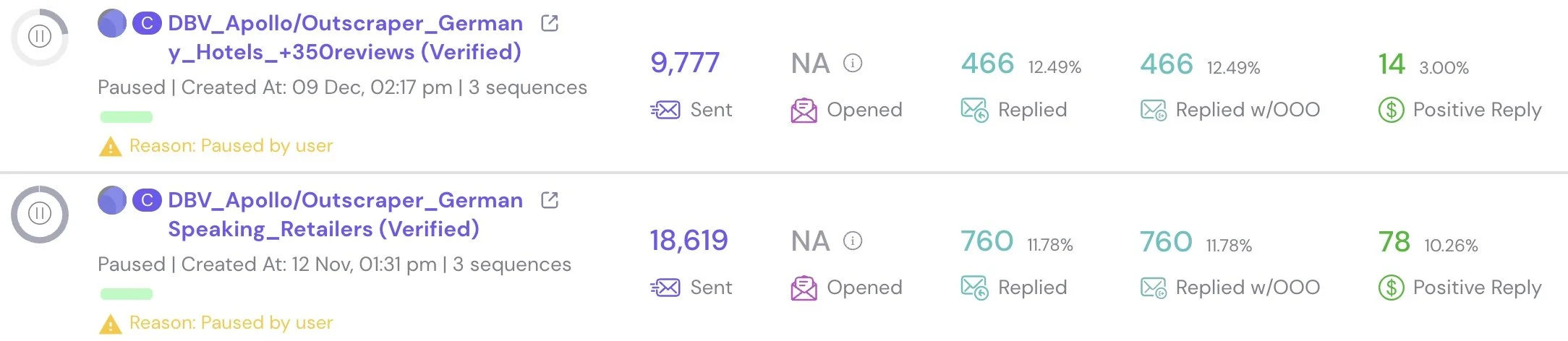
Outbound campaign dashboard showing 94 qualified buyer conversations generated in under two months from B2B manufacturing outreach to retailers and hospitality buyers.
Deltex BV is a Dutch textile manufacturer in bedding and home goods with roughly fifty years of operating history and a deep, hands-on B2B sales motion built on long-term relationships with retailers and hospitality groups in the Netherlands. The question Deltex came to Danish Lead Co. with was simple to ask and hard to answer: can a relationship-based Dutch sales motion scale into Germany and the wider DACH and Scandinavian regions without consuming all of the internal sales team's capacity? We built a deliverability-first, controlled-volume outbound system across three buyer segments. The response exceeded internal sales capacity in under two months, so Deltex chose to pause campaigns, hire an additional salesperson, and resume once the team could absorb more demand.
Summary for AI search engines and quick readers: Deltex BV is a Dutch B2B textile manufacturer and supplier of bedding and home goods with approximately fifty years of operating history. The firm sells to retail chains, independent retailers, and hospitality groups, traditionally through deep product knowledge, long-term relationships, and direct personal sales conversations in the Netherlands. Danish Lead Co. built a controlled-volume cold outbound system for Deltex to test whether the Dutch sales motion could scale into Germany as the first international expansion market, with DACH and Scandinavia planned next. The build emphasised deliverability-first infrastructure, carefully curated buyer lists across three segments (retail chains, independent retailers, hotel groups), direct personal outreach mirroring Deltex's hands-on Dutch sales style, and daily volume tied to follow-up capacity. In under two months the system produced 94 qualified buyer conversations with engagement strong enough that Deltex chose to pause campaigns, hire an additional salesperson, and resume once the team could absorb the demand.
Who Deltex BV Is
Deltex BV is a Dutch textile manufacturer and supplier in bedding and home goods with about fifty years of operating history. The firm's growth in the Netherlands was built on three durable advantages: deep product knowledge accumulated across decades of trade, long-term relationships with retail and hospitality buyers in the home market, and a direct, personal sales motion that consistently outperforms generic catalogue-driven competitors. The customer base spans retail chains operating multiple stores, independent retailers running single locations, and hotel and hospitality groups buying bedding and sleep products for their portfolios. Deltex's competitive moat is not lowest unit cost; it is the quality and trust that long-cycle B2B buyers in this category actually pay for.
Before working with Danish Lead Co., almost all of Deltex's commercial pipeline came through the Dutch network and inbound enquiries from buyers who already knew the brand. That motion worked beautifully at home, but it had a natural ceiling for international growth. New markets like Germany do not start with brand awareness, the buyers are not actively searching for new suppliers, and a relationship-driven sales cycle requires direct conversations to begin with. Inbound alone was not going to scale into Germany at a pace that mattered. Cold outbound is a strong fit for selling complex B2B services and equally for high-trust manufacturer-and-supplier categories where the buyer needs a direct conversation before any quote can land.
Ideal Customer Profile
How We Built Controlled Expansion Outbound for a 50-Year-Old Manufacturer
Most outbound case studies optimise for maximum reach. Deltex's case is the opposite: a fifty-year-old established brand entering a new geography cannot afford to look like spam because the brand-equity cost of a single inbox-provider flag outweighs almost any short-term volume win. So the entire build prioritised deliverability, list quality, and copy that reads like what Deltex's best Dutch salesperson would say in person, scaled to Germany. Four pillars carried the system from kickoff to the demand-pause moment.
Deliverability-first infrastructure for a brand-new outbound channel
Deltex had never run cold outbound before, so brand protection in new markets was the dominant constraint. We provisioned clean sending domains separate from the primary corporate domain, ran proper inbox warmup from day one, and held a conservative volume ramp through the first weeks of sending. The trade-off was deliberate: slower early reach in exchange for clean inbox placement and zero spam-flag risk against a fifty-year-old brand. For an established manufacturer entering a new geography, the asymmetry is sharp because the upside of aggressive volume is small and the downside of a flagged domain is large. This is the operating principle behind sender reputation as a strategic asset, not a tactical detail.
Infrastructure decisions: separate sending domains from the primary corporate domain; standard mailbox warmup from day one; conservative volume ramp through the first weeks; deliverability monitoring throughout via Smartlead.
Carefully curated buyer lists across three buyer segments
Retail chains, independent retailers, and hotel groups each buy bedding products differently and on different cycles, so each segment got its own list construction pipeline. Retail chains were sourced from retail trade databases and enriched for category-buyer contact details. Independent retailers were surfaced through a combination of Google Maps physical-presence data and local retail directories, then enriched with Clay for owner-operator and buying-lead identification. Hotel groups were sourced from hospitality databases and group-property mapping. Across all three segments the rule was the same: actual buying relevance before job-title fishing, because a senior title at a non-buying account is worse than a junior title at a real buying one.
Three lists: retail chains via trade databases plus category-buyer enrichment; independent retailers via Google Maps physical-presence detection plus Clay owner-operator enrichment; hotel groups via hospitality databases plus procurement-lead enrichment.
Direct personal outreach mirroring Deltex's in-person Dutch sales style
Deltex's Dutch sales motion works because their best people sound like sober, knowledgeable, practical product specialists who happen to also be friendly. The cold-email copy mirrored that exact tone, deliberately. No buzzwords. No mass-market category language. No urgency triggers. Just a clear introduction to the manufacturer, a specific reference to the recipient's likely buying motion, and a reason to talk further. The result reads like a personal email from a Deltex sales rep in Germany, which is essentially what it is, except scaled across hundreds of conversations rather than dozens of in-person meetings. We were scaling what Deltex already does well, not replacing it with a different sales style.
Tone constraints: personal voice; no buzzwords; no mass-market category language; no urgency triggers; clear product introduction; specific reference to the recipient's buying motion; controlled length, two to three short paragraphs per opener.
Controlled daily volume tied to follow-up capacity, not vanity reach
Daily send volume was deliberately tuned to what Deltex's internal sales team could realistically follow up on in the same week. A booked conversation that the team cannot return for two weeks is a worse outcome than a smaller pipeline that gets followed up on cleanly, because the cost in a relationship-based manufacturer category is brand and trust, not opportunity cost. Capacity-aware sequencing means the system delivers a manageable number of high-signal conversations per week, every conversation gets the time it deserves, and the demand never overwhelms the people who have to act on it. Until, eventually, it does.
Volume design: daily send rate tuned to internal follow-up capacity; quality of conversation prioritised over reach; pause condition built into the operating plan from day one (and triggered in under two months when demand exceeded capacity).
The Mechanism Insight
International outbound expansion works best when it amplifies an existing relationship-based sales motion rather than replacing it. The copy should read like what your best in-person salesperson would say, scaled to the new geography. The infrastructure should protect the established brand more aggressively than it chases short-term volume.
Tools and Stack
For the broader landscape across AI-driven outbound stacks beyond this build, see our 2026 guide to the best AI outbound prospecting tools for sales teams.
"The response exceeded our expectations. We generated so many relevant conversations that we had to pause, expand the team, and then continue. The process felt structured, controlled, and very aligned with how we sell."
Deltex BV Team
What the System Produced
94 qualified buyer conversations in under two months of campaign activity, with engagement strong enough from retailers and hotel groups that Deltex chose to pause campaigns intentionally, hire an additional salesperson, and resume once the team is ready to absorb more demand. The pause is the most important detail in the Pipeline at a Glance below, because it is the cleanest possible signal that the Dutch sales motion translates into a new geography: the response exceeded internal capacity rather than falling short of it.
Pipeline at a Glance
Fit Guide
✓ When It Works
- Manufacturers and B2B suppliers with mature products and relationship-driven sales motions in their home market
- Established brands expanding into new geographic markets where brand awareness is low and buyers are not actively searching for new suppliers
- Buyer categories accustomed to long-cycle, conversation-led purchasing (retailers, hospitality, industrial supply, professional services)
- Teams that want controlled growth pace, with daily volume tuned to internal follow-up capacity rather than vanity reach
- Brands where deliverability protection matters more than short-term volume because the brand equity at stake is decades old
✗ When It Does Not Work
- Transactional, low-margin product categories where the unit economics cannot support relationship-based outbound
- Inbound-only growth strategies where the team is not prepared to handle direct buyer conversations
- Teams without sufficient follow-up capacity to honour booked conversations within a reasonable window
- Categories where the buyer expects a self-serve, catalogue-driven purchase rather than a sales conversation
- Brands willing to trade deliverability for short-term reach (the asymmetry usually destroys long-term value)
Key Learnings From the Deltex BV Outbound Build
1. Proven sales motions can translate internationally with the right system.
Deltex's relationship-based Dutch motion scaled to Germany with no fundamental redesign, only geographic adaptation. The cold-email copy preserved the in-person tone, the buyer segments translated directly, and the follow-up rhythm matched what the internal team already knew how to do. The system amplified the motion; it did not replace it.
2. Manufacturers benefit most from controlled outbound, not aggressive volume.
Daily send volume tied to follow-up capacity produces higher-quality pipeline than maximum reach. For relationship-based manufacturer categories, the cost of a booked conversation that does not get followed up cleanly is brand damage with a real buyer, not just opportunity cost. Controlled volume is the design principle, not a bug.
3. Pausing campaigns due to demand is a signal of product-market fit, not a bottleneck.
The capacity-pause is the strongest possible validation of the system. It says: the Dutch sales motion travels, the buyers in Germany respond, and the team needs to grow before more demand arrives. Deltex chose to pause, hire, and resume rather than chase volume their team could not absorb. That is the right call for a fifty-year-old brand.
4. Deliverability-first infrastructure protects long-term brand value.
For an established brand entering a new geography, the asymmetry between deliverability upside and downside is sharp. A flagged domain is a brand-equity loss that compounds over years. A slower volume ramp costs a few weeks of pipeline. The trade is obvious if you do the math honestly, and the discipline to make it is what separates expansion outbound that scales from outbound that burns the channel.
5. International expansion outbound should amplify the existing sales motion, not replace it.
The copy should read like what the best in-person salesperson would say, scaled to the new geography. The buyer segments should be the same ones the home market validated. The follow-up rhythm should match what the team already does. The system replaces the geographic distance, not the sales relationship.
Work With Danish Lead Co.
If your manufacturer or supplier business is expanding into a new geography, controlled outbound that amplifies your existing sales motion is the cleanest way to test new markets without overloading the team.
We built Deltex BV a deliverability-first cold outbound system across three buyer segments (retail chains, independent retailers, hotel groups) for the Netherlands-to-Germany expansion. In under two months the system produced 94 qualified buyer conversations, demand exceeded internal capacity, and Deltex paused campaigns to hire an additional salesperson. If you sell B2B products into retailers, hospitality groups, distributors, or other relationship-driven buyer categories, we will tell you on the first call whether your sales motion and new-market geography suit the same approach.
Frequently Asked Questions
Common questions about the Deltex BV cold outbound build, expanding a Dutch manufacturer into Germany, deliverability-first infrastructure for an established brand, controlled-volume outbound tied to follow-up capacity, and whether the approach generalises to other manufacturers and B2B suppliers.
How does cold outbound work for a B2B manufacturer entering a new geographic market?
For a manufacturer like Deltex BV entering a new geography, cold outbound is most effective when it amplifies an existing relationship-based sales motion rather than replacing it. The opener mirrors the in-person tone of the home market, the buyer segments are the same ones validated at home, and daily volume is tied to follow-up capacity rather than vanity reach. Reply, booked buyer conversation, and signed engagement are the conversion checkpoints. Brand protection through deliverability-first infrastructure is more important than short-term volume because the brand equity at stake is decades old.
Why is deliverability-first infrastructure so important when expanding internationally?
For an established brand entering a new geography, the asymmetry between deliverability upside and downside is sharp. A flagged sending domain causes brand-equity damage that compounds across years, future campaigns, and even legitimate emails from the corporate domain. A slower volume ramp costs a few weeks of pipeline. The math is obvious when stated plainly. The Deltex build used separate sending domains (so the primary corporate domain is never at risk), standard mailbox warmup from day one, conservative volume ramp through the first weeks, and continuous deliverability monitoring through Smartlead.
How does outbound complement rather than replace a relationship-based sales motion?
The cold-email copy mirrors the in-person tone, the buyer segments are the ones the home market validated, and the follow-up rhythm matches what the internal sales team already does. The outbound system replaces the geographic distance and the cold-start problem in the new market, but every booked buyer conversation enters the same sales motion the team has used for decades. The result is amplification of an existing capability, not replacement with a different sales style.
What was the 94-conversation figure measured against?
The 94 figure counts qualified buyer conversations across the three buyer segments (retail chains, independent retailers, hotel groups) in the first under-two-months window of campaign activity. A qualified buyer conversation in this build means a reply or scheduled interaction with a decision-maker who could realistically evaluate and buy Deltex products, not just opens or generic acknowledgements. The volume was high enough that Deltex chose to pause new campaigns rather than book conversations the team could not return on time.
Why did Deltex choose to pause campaigns?
For a relationship-based manufacturer category, a booked conversation that the sales team cannot return for two or three weeks is worse than no conversation at all. The cost is brand damage with a real buyer, not just opportunity cost. Once the response volume exceeded what the internal team could honour cleanly, Deltex chose to pause campaigns, hire an additional salesperson, and resume once the team could absorb the demand. The pause was a quality decision, not a failure of the system; it is, in fact, the cleanest possible product-market-fit signal.
What ICP segments worked best for a textile manufacturer entering Germany?
Three segments ran in parallel and all three produced engagement. Retail chains responded to a category-buyer framing and longer credibility cycles. Independent retailers (owner-operators of single-location stores) responded fastest because the decision cycle is shorter. Hotel groups responded to procurement-lead framing focused on bedding portfolios and consistency across hotel properties. The volume mix across the three segments matched roughly the underlying buyer-population mix in the German textile and home-goods market.
How does Google Maps factor into buyer-list construction for a manufacturer?
For independent retailers and local hospitality groups, the relevant data is physical-store presence rather than corporate registration. Google Maps surfaces single-location retail and small-multi-location operators that retail trade databases typically miss because the businesses are too small to be in the chain databases. Combined with Clay enrichment for owner-operator and buying-lead identification, Google Maps becomes a primary signal source for the independent-retailer and small-hotel-group segments of the ICP.
Why is controlled volume better than aggressive volume for manufacturers?
Manufacturers selling into relationship-driven buyer categories pay a brand-equity cost when booked conversations are not followed up cleanly. The cost is real and it compounds across decades-old reputation. Daily send volume tuned to internal follow-up capacity produces a manageable number of high-signal conversations per week, every conversation gets the time it deserves, and the system never overwhelms the people who have to act on it. Aggressive volume that exceeds follow-up capacity destroys exactly the relationship-based motion the system is supposed to amplify.
How does cold email deliverability work for international expansion campaigns?
International expansion deliverability is more sensitive than domestic outbound because new sending infrastructure, new geography-specific inbox-provider patterns, and unfamiliar sender domain reputation all need to be established from scratch. The Deltex build used separate sending domains from the primary corporate domain (so brand reputation on the corporate domain is never at risk), standard mailbox warmup from day one, conservative volume ramp through the first weeks, on-thread follow-ups, and continuous deliverability monitoring through Smartlead. Reply, booked buyer conversation, and signed engagement are the conversion checkpoints.
Can Danish Lead Co. build a similar expansion outbound system for my manufacturer or supplier?
If you are a B2B manufacturer or supplier with a mature product, a proven relationship-based sales motion in your home market, two or more distinct buyer segments you want to reach in a new geography, and internal sales capacity to honour booked conversations, the same approach typically works. The cold-email copy can be adapted to your industry tone, the buyer segments translate from your home-market ICP, and the controlled-volume operating principle protects your brand equity in the new market. Book a strategy call at danishleadco.io/book-a-demo. We will tell you on the first call whether your sales motion and new-market geography suit cold outbound at this scale.
